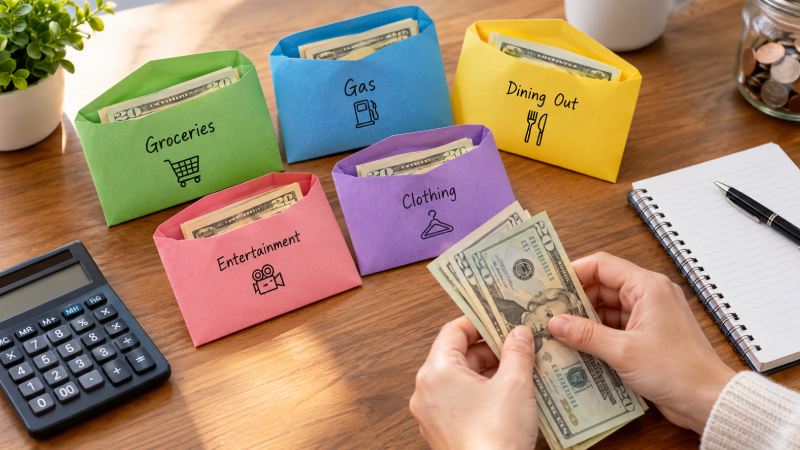
An envelope budgeting system is a cash-based financial strategy where take-home pay is divided into physical or digital containers for specific variable spending categories.
Once the allocated money inside a container is exhausted, all spending in that category stops completely until the next pay period. This method establishes artificial scarcity, curbing impulsive card swiping by leveraging physical payment friction.
While fixed bills stay automated in a bank account, variable costs like groceries, gas, and dining out are strictly managed through these designated buckets to effectively prevent unnecessary overspending and permanently restore total control over monthly personal finances.
How Does the Envelope Budgeting System Work?
Understanding the operational mechanics of cash management requires shifting from passive electronic payments to intentional category allocation. Here is how the core steps build financial discipline across every paycheck.
Step 1: Calculate Net Income and Reserve Fixed Expenses
Begin each budgeting cycle by calculating your exact net take-home pay after taxes and payroll deductions. Immediately subtract mandatory fixed expenses like rent, insurance, utilities, car payments, and core savings goals.
These predictable, non-cash obligations must remain in your primary checking account for electronic transfer rather than being withdrawn as cash, ensuring your essential overhead remains protected and fully automated before variable allocation begins.
Step 2: Categorize Variable Expenses and Set Strict Limits
Next, isolate high-leakage variable spending categories such as groceries, dining out, gas, clothing, and entertainment. Audit previous bank statements to establish realistic, strict dollar caps for each designated area.
These variable categories represent the specific everyday expenses where unmonitored plastic card swiping typically causes monthly budget overruns, financial strain, and unallocated cash leaks across households.
Step 3: Label, Stuff, and Enforce the Hard Stop Rule
Withdraw the total variable spending amount from an ATM and distribute the physical cash into labeled paper envelopes. When making purchases, spend strictly from the dedicated category container.
Once an envelope reaches zero, all spending in that category must immediately cease until the next paycheck hits. Casual borrowing between envelopes is prohibited unless recorded in a written log.
The Psychology Behind Cash Envelope Budgeting
The effectiveness of physical cash management relies on behavioral principles rather than simple arithmetic. By altering how money is handled, consumers actively interrupt unconscious spending habits.
Pain of Paying and Loss Aversion Principle
Handing over physical paper bills triggers a literal psychological discomfort known as the pain of paying. This visceral reaction activates loss aversion, forcing buyers to weigh every transaction carefully.
In contrast, swiping plastic credit cards numbs this mental friction, leading consumers to spend up to 83% more on transactions compared to using paper currency during routine shopping trips.
Creating Artificial Scarcity to Prevent Overspending
Physical containers create explicit visual boundaries for daily expenses. Seeing paper currency deplete inside a labeled category provides real-time feedback on remaining purchasing power.
This artificial scarcity shifts consumer decision-making from passive desires to essential needs, curbing impulse purchases at checkout counters and keeping monthly expenses strictly within established earnings.
Physical vs. Digital Envelopes: Which Budgeting Method Is Right for You?
Selecting the right financial framework depends on individual spending habits, technological comfort, and desired friction level. Comparing physical, digital, and hybrid options highlights key operational tradeoffs.
| Feature Dimension | Traditional Physical Envelopes | Pure Digital Envelope Apps | The Hybrid Ledger Framework |
|---|---|---|---|
| Operational Medium | Actual paper envelopes and paper currency | Software connected to bank accounts | Credit/debit card spending logged on paper slips |
| Friction Level | Extreme tactile friction; curbs impulse buying | Low friction; automated tracking | Medium friction; maintains bank security with logs |
| Safety & Security | Low safety; risk of physical theft, fire, or loss | High safety; FDIC insurance and encryption | High safety; money stays secure in bank |
| Best Suited For | Chronic overspenders and tactile learners | Tech-savvy users, online shoppers, couples | Reward earners seeking strict category limits |
| Popular Tools | Cash binders, accordion folders | YNAB, Goodbudget, Qube Money | Bullet journals, custom spreadsheet logs |
What Are the Disadvantages of Envelope Budgeting (and How to Fix Them)?
While cash containers effectively curb overspending, structural limitations can disrupt long-term financial routines. Applying targeted adjustments solves these common operational challenges without abandoning system discipline.
Loss of Yield and Inflation Risks Explained
Holding large amounts of physical cash causes money to lose purchasing power to inflation while earning zero interest. Furthermore, cash payments forfeit credit card cash-back rewards and miles.
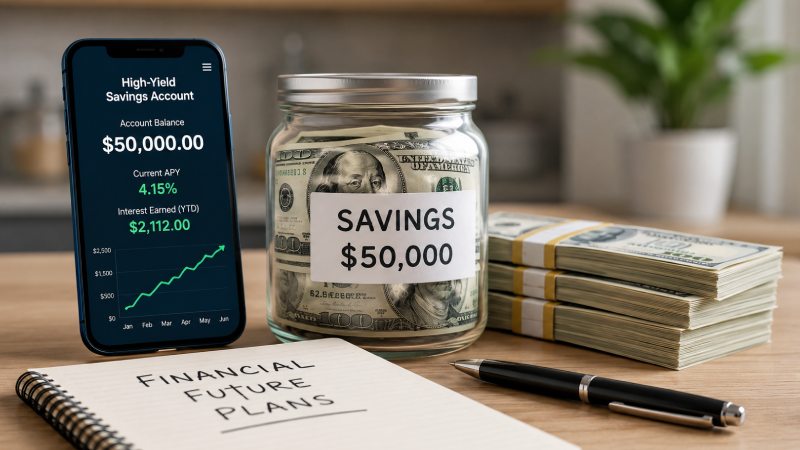
To resolve this gap, keep only immediate 30-day variable operational cash in physical containers, while retaining Emergency Funds and long-term savings in a High-Yield Savings Account to earn compound interest.
The Borrowing Slippery Slope and E-Commerce Friction
Unmonitored money transfers between containers undermine artificial scarcity and destroy system accountability. Additionally, physical currency cannot pay for online shopping or digital subscriptions.
To prevent cheating, place a physical index card inside each container to log every transfer date, amount, and reason. For digital transactions, switch to virtual envelope applications that sync with online accounts.
Security Vulnerabilities and Loose Change Accumulation
Storing physical currency at home exposes funds to theft, fire, or loss without FDIC insurance protection. Furthermore, breaking larger bills produces loose change that slowly bleeds budgets.
Establish a designated coin container to collect spare change; at the end of each month, sweep these accumulated coins directly toward extra debt paydown or savings targets.
Advanced Envelope Strategies & The 100 Envelope Challenge
Expanding your cash management strategy beyond basic monthly expenses accelerates long-term wealth accumulation. Incorporating specialized savings buckets transforms routine budgeting into an engaging financial system.
Sinking Funds Envelopes for Non-Monthly Expenses
Irregular expenses like car maintenance, holiday gifts, and medical bills frequently catch households off guard. Establish dedicated sinking fund containers for these predictable non-monthly obligations.
By depositing $20 to $50 into each sinking bucket every single month, cash remains fully available when large invoices arrive, effectively preventing emergency credit card debt and financial disruption.
The 100 Envelope Challenge Mechanics and Savings Math
The 100 envelope challenge gamifies savings by numbering physical containers from 1 to 100. Over 100 days or weeks, randomly select one container and deposit the exact dollar amount printed on its front.
Using the mathematical summation formula (n × (n + 1)) / 2, completing all 100 containers yields exactly $5,050 in total accumulated cash reserves.
End-of-Cycle Savings Sweep for Extra Funds
When extra cash remains in variable spending containers at the end of a budgeting cycle, avoid rolling it over into next month’s discretionary funds. Instead, sweep all remaining funds directly into a locked savings container.
This practice gamifies expense control and continuously builds your emergency reserves or investment capital without increasing monthly income.
Step-by-Step Envelope Budgeting Plan for Beginners
Transitioning to cash budgeting works best through a phased rollout rather than an immediate overhaul. Following this structured roadmap builds sustainable spending discipline over three months.
- Phase 1: Identify Leakage Categories (Week 1) — Audit your last 3 bank statements to pinpoint the top 3 variable areas where overspending consistently occurs, such as dining out, groceries, or retail shopping.
- Phase 2: Establish Primary Checking Safeguards — Calculate total net take-home pay and ensure all fixed bills (rent, utilities, insurance) and primary savings goals stay in your bank account for automated electronic payment.
- Phase 3: Launch a 3-Category Hybrid Test (Month 1) — Create physical containers strictly for your top 3 problem spending areas. Withdraw cash designated for these categories while leaving fixed expenses automated online.
- Phase 4: Execute the Zero Rule and Transfer Logs — Carry only the designated container when shopping. Stop spending when the container reaches zero balance, and record any mandatory inter-category transfers on physical index cards.
- Phase 5: Audit, Adjust, and Scale (Month 2) — Review month-end spending. If grocery cash consistently runs out early, adjust allocations realistically across categories based on actual usage patterns.
- Phase 6: Transition or Scale Framework (Month 3 & Beyond) — Decide whether to expand physical containers across all variable categories or transition to digital envelope tools for automated tracking and online convenience.
Frequently Asked Questions About Envelope Budgeting
Does the Envelope Budgeting System Really Work?
Yes, the system is highly effective because it relies on physical cash friction and the psychological pain of paying to curb impulse purchases. Credit cards numb spending awareness, leading consumers to spend up to 83% more on plastic.
However, the system fails if unmonitored borrowing between containers breaks artificial scarcity.
How Do You Manage Fixed Bills with Cash Envelopes?
Fixed expenses such as rent, mortgages, insurance, utilities, and automated subscription payments should not be paid using physical cash. Keep these funds directly inside your primary checking account.
Subtract all fixed bills and automated savings contributions immediately on payday before withdrawing cash for variable spending categories.
What Is the Main Disadvantage of Cash Envelopes?
Primary drawbacks include security risks from carrying uninsured physical cash vulnerable to theft or loss, loss of high-yield savings interest and inflation defense, forfeit of credit card rewards, and difficulty executing online purchases.
Using a hybrid framework or digital app mitigates these structural weaknesses while preserving spending control.
Conclusion: Final Takeaways and Action Plan
Mastering your personal finances requires replacing passive electronic card swiping with clear, enforced category limits.
The envelope budgeting system provides the tangible boundaries and psychological friction necessary to eliminate overspending, eliminate debt, and build lasting financial discipline.
Whether you choose traditional paper containers, a hybrid ledger, or digital software applications, establishing artificial scarcity puts you in full control of every dollar you earn.
Audit your previous bank statements today, identify your primary spending leaks, and start your 30-day cash trial to transform your financial future.