
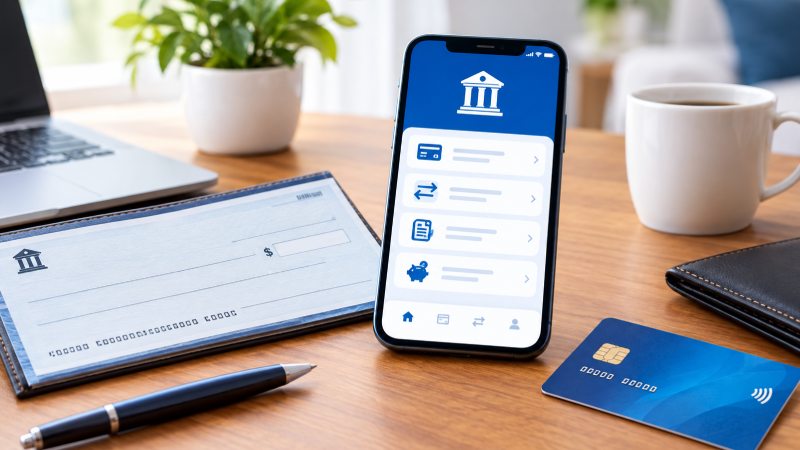
A checking account is a highly accessible deposit account at a bank or credit union designed for everyday transactions, bill payments, and frequent cash access.
Unlike savings accounts built for long-term growth, checking accounts offer complete liquidity through debit cards, paper checks, Automated Clearing House (ACH) transfers, and ATM withdrawals.
They typically pay little or no interest but enable employers to deposit paychecks electronically. Deposits are federally insured up to $250,000 per depositor. A checking account serves as the central operating hub for managing daily spending and personal short-term cash flow.
How Does a Checking Account Work?
Understanding how money moves through your primary account helps you avoid unexpected costs while managing daily expenses efficiently. Below are the primary payment pipelines, account identifiers, and federal consumer protections that secure your everyday cash flow.
Payment Pipelines and Transaction Channels
Checking accounts provide complete liquidity without legal withdrawal penalties or transaction limits. Funds enter your account electronically through direct deposit paychecks or peer-to-peer transfers via Zelle or Venmo.
You can spend or withdraw cash immediately using a debit card, writing paper checks, setting up automated billing transfers through the Automated Clearing House network, or drawing paper currency directly from local ATM networks.
Checking Account Number and Routing Identifiers
Every account relies on an 8-to-12 digit checking account number paired with a 9-digit bank routing number. Printed at the bottom of checks and displayed inside mobile applications, these identifiers ensure funds route accurately during electronic payments.
You can also assign a custom account nickname in digital banking to organize spending categories without altering official bank routing data.
Federal Insurance and Fraud Protection
Your account balance receives federal protection up to $250,000 per depositor via the FDIC at commercial banks or the NCUA at credit unions.
Under the Electronic Fund Transfer Act, reporting lost or stolen debit cards within two business days caps your liability for unauthorized charges at $50. This framework shields your cash against total loss during bank failures or unauthorized electronic card transactions.
Which Type of Checking Account Is Best for You?
Financial institutions design specific account categories to match different consumer needs, ranging from zero-cost digital platforms to nationwide physical branch networks. Review these primary account structures to locate your ideal daily payment option.
Free Checking Accounts With No Monthly Fees
Free checking accounts eliminate recurring maintenance charges without imposing strict balance minimums or direct deposit quotas. Platforms like Capital One 360 Checking deliver zero-fee structures alongside physical branch access at Capital One Cafes.
Alternatively, Ally Bank Spending Account offers zero-fee banking with automated budgeting tools like spending buckets to keep recurring monthly expenses neatly structured.
High Interest Checking Accounts for Maximum Yield
High-yield accounts earn interest on working cash, unlike standard options paying near 0%. For example, Connexus Credit Union Xtraordinary Checking delivers up to 4.50% APY.
Securing these peak rates requires meeting monthly activity criteria, such as completing 15 debit card purchases or spending $500 per statement cycle. SoFi also offers competitive yields when setting up direct deposits.
Traditional Branch Networks and National Banks
Major national institutions cater to clients requiring in-person banking, physical cash deposits, or cashier’s checks. Chase Total Checking features over 4,700 physical locations nationwide.
While it carries a $15 monthly fee, this charge is waived with $1,000 in monthly direct deposits. Wells Fargo Clear Access Banking offers student options designed to restrict overdraft risks.
Second Chance Checking Accounts for Rebuilding Credit
Applicants with negative ChexSystems records from past unpaid overdrafts often face account denials. Second-chance options remove this barrier to restore banking access.
Chime Checking completely waives credit checks and banking history verification during setup. Meanwhile, Chase Secure Banking provides a second-chance option backed by physical branch managers for in-person support.
What Is the Difference Between Checking and Savings Accounts?
Selecting between checking and savings structures depends on whether your immediate priority is liquid daily spending or long-term capital accumulation. The comparison table below highlights the key operational trade-offs between both banking vehicles.
| Feature | Checking Account | Savings Account |
|---|---|---|
| Primary Purpose | Everyday spending, bills, and cash access | Storing and growing money long-term |
| Liquidity & Access | Unlimited daily transactions via debit cards and ACH | Restricted transaction access; no debit cards |
| Interest Rate (APY) | Usually 0% or very close to zero | Higher yield interest rates for cash growth |
| Connected Tools | Debit card, P2P app links, mobile bill pay | Savings vaults and automated transfers |
Common Hidden Fees and Banking Costs to Avoid
Although roughly 31% of accounts operate completely fee-free, other bank structures apply specific costs that drain your balance. Review these primary cost drivers to protect your everyday money from unexpected charges.
Monthly Maintenance Charges and Waiver Rules
Standard accounts impose monthly maintenance fees averaging $13.51 to $13.95. Banks typically waive this charge if you maintain a qualifying minimum balance, such as $1,500, or receive qualifying direct deposit paychecks totaling $1,000 or more each month.
Failing to meet these conditions results in automatic monthly deductions that reduce your available funds.
Overdraft Fees and High-to-Low Resequencing
Overdraft penalties cost between $26.77 and $35 per transaction when spending exceeds available funds. Certain traditional institutions use high-to-low resequencing, processing your largest daily payments before smaller transactions.
This depletes your balance faster, causing multiple subsequent small purchases to each trigger an individual $35 penalty.
Out-of-Network ATM Penalties and Paper Fees
Using an ATM outside your bank’s designated network leads to double charges from both the machine owner and your financial institution, averaging $4.86 per withdrawal.
Additionally, opting for printed paper bank statements rather than electronic statements adds an extra $2 to $5 in monthly service charges. Axos Bank avoids this by reimbursing domestic ATM fees.
How Much Money Should You Keep in a Checking Account?
Determining the correct balance threshold for your daily account protects your purchasing power while guarding against security risks. Follow these cash management guidelines to keep your assets properly allocated.
The Two Month Expense Rule and Inflation Risk
Holding more than one to two months of core living expenses—typically $5,000 to $10,000—in a checking account is excessive. Because standard accounts yield near 0% interest, excess cash actively loses purchasing power to inflation over time.
Transferring surplus funds into high-yield savings accounts or investment vehicles ensures your capital continues growing productively.
Debit Card Security and Fraud Exposure
Checking accounts link directly to debit cards, exposing your primary money pool to skimming and online card fraud. If a compromise occurs, unauthorized parties can drain your full operational balance before bank safeguards activate.
Maintaining a strict cash buffer in checking while storing bulk capital safely in savings limits potential exposure during security breaches.
Specialized Accounts for Businesses and Students
Distinct demographic groups require tailored account features to handle unique legal requirements and financial stages. Exploring specialized account options ensures access to reduced fees, interest yields, or essential business tools.
Business Checking Accounts for Legal Isolation
Business checking accounts separate personal finances from company operations, maintaining legal liability protection and simplifying corporate tax filings. Bluevine Business Checking earns 1.30% interest on balances up to $250,000 without monthly fees.
Conversely, Chase Business Complete Banking supports enterprises handling physical cash deposits or needing integrated point-of-sale card payment processing terminals.
Student and Youth Banking Options
Student checking accounts eliminate monthly maintenance fees and lower minimum opening deposit requirements for young adults. These accounts provide basic debit card access and mobile app management tools tailored for younger users.
Most student accounts automatically convert into standard checking structures once the holder reaches age 23 to 25.
Step-by-Step Guide to Opening a Checking Account
Setting up a new payment account requires gathering essential personal identification and completing verification checks. Follow this quick structured guide to open your new account smoothly online or in person.
- Select an Account Category: Choose between fee-free online platforms (like Capital One 360), high-yield credit unions (like Connexus), or traditional branch networks (like Chase) based on your transaction needs.
- Gather Identification Documents: Prepare a government-issued photo ID (driver’s license or passport), Social Security Number (SSN), and proof of physical address.
- Submit Your Application: Fill out personal details online or visit a local branch manager to complete official verification paperwork.
- Fund the Opening Deposit: Deposit initial cash or schedule an electronic transfer from an existing account to meet any minimum opening requirements.
- Configure Direct Deposit and Digital Banking: Provide your employer with your routing and checking account number, activate mobile app access, and set up account nicknames.
Frequently Asked Questions
What is the best bank for a checking account?
The best institution depends on your daily habits. Capital One 360 leads for online fee-free banking, SoFi offers integrated high-yield options, and Chase Total Checking delivers the largest physical branch footprint nationwide.
How much cash is too much in a checking account?
Keeping more than $5,000 to $10,000—or more than two months of living expenses—is too much. Excess funds earn 0% interest and face debit card fraud risks, making high-yield savings a superior alternative.
Can you open an account with a poor banking history?
Yes. Second-chance checking options like Chime bypass ChexSystems history checks, while Chase Secure Banking provides a branch-supported alternative for rebuilding your banking status.
What is the difference between a routing number and an account number?
A 9-digit routing number identifies your specific financial institution, while an 8-to-12 digit checking account number specifies your personal account within that bank.
What is a checking account nickname?
An account nickname is a custom label created inside your banking app (like “Rent & Bills”) to organize finances without changing official account or routing numbers.
Next Steps and Financial Action Plan
A checking account serves as your central financial launchpad for managing everyday cash flows, paying recurring bills, and receiving paychecks.
Selecting an account model that eliminates monthly maintenance charges and protects against high overdraft fees ensures your money stays working efficiently.
Cap your checking balance at two months of living expenses to avoid inflation loss and security exposure, moving surplus funds into interest-bearing savings or investments.
Audit your current banking fees today, select a provider that matches your habits, and configure automated direct deposits to build a seamless personal cash management hub.