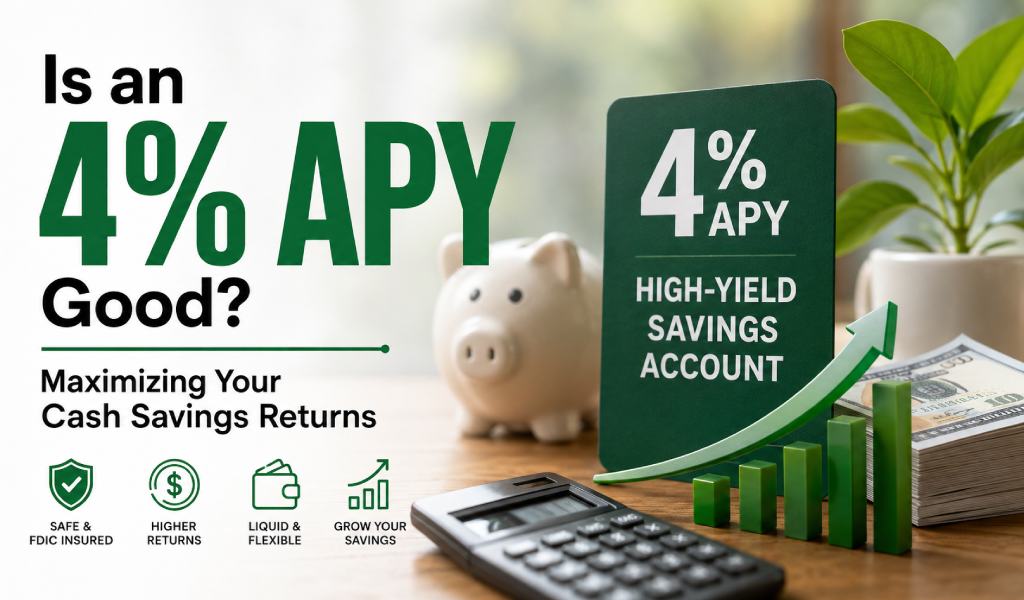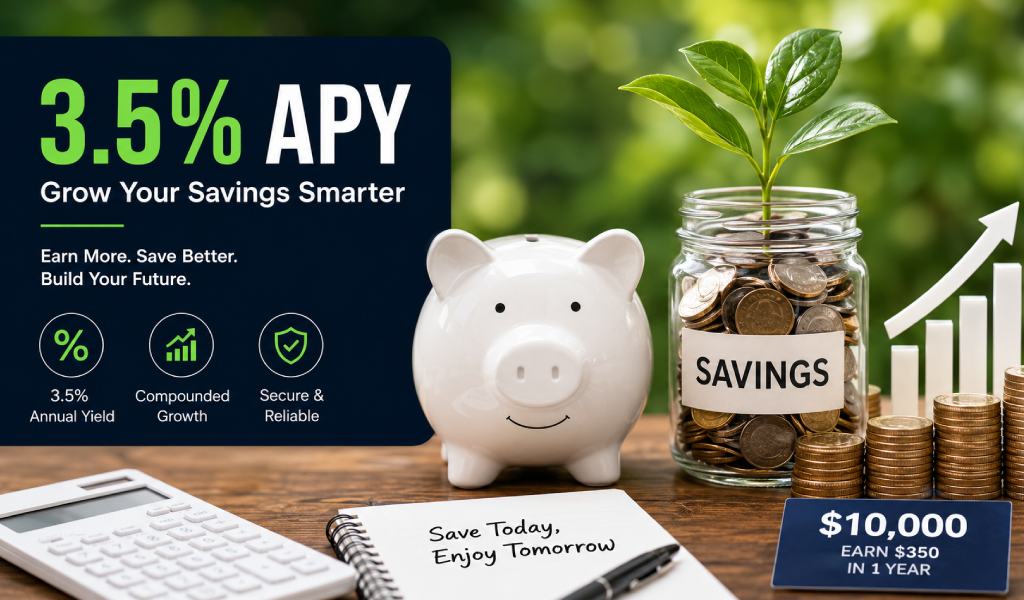
A good APY rate currently falls between 3.50% and 4.25%, with elite online digital banks offering returns as high as 4.26%. These competitive yields are primarily found in high-yield savings accounts (HYSAs) rather than traditional brick-and-mortar institutions.
Because the Federal Reserve has maintained its benchmark interest rate steady between 3.50% and 3.75%, top-tier banks are aggressively competing for your deposits.
To maximize your wealth, you must look beyond the national average of 0.38% and select accounts that leverage compounding to ensure your cash works as hard as possible for your future.
Defining Current APY Benchmarks in the Modern Economy
Before committing capital, it is vital to understand current market standards. Benchmarks allow you to evaluate if your bank is providing competitive value or if you are losing money to inflation.
Identifying Top-Tier High-Yield Savings Rates
Currently, a rate is deemed competitive if it sits between 3.50% and 4.25%. High-yield savings accounts from digital-first institutions frequently exceed this, reaching up to 4.26%.
These institutions lack the overhead of physical branches, allowing them to redirect those savings into higher interest payments for their depositors, creating a significant advantage for proactive savers.
Recognizing the Impact of National Averages
The FDIC national average is currently a meager 0.38%, acting as a stark contrast to high-yield options. Many traditional mega-banks offer as little as 0.01% to 0.03%. Understanding this gap is essential; it reveals that sticking with a legacy institution could cost you hundreds or thousands of dollars in potential earnings annually.
APY vs APR: Mastering the Mechanics of Interest
Understanding these two terms is critical for any wealth-building strategy. While they look similar, they represent the difference between your money growing and the cost of your debt.
The Mechanics of Annual Percentage Yield
APY measures the total interest earned on deposits over one year, specifically accounting for the effects of compound interest. Compounding occurs when you earn interest on both your principal and the interest previously accumulated.
This exponential growth model is the primary driver of wealth in high-yield accounts, making the compounding frequency a key factor for investors.
Understanding Annual Percentage Rate in Borrowing
APR represents the simple interest rate paid on borrowed funds, such as credit cards or personal loans. Unlike APY, it does not factor in compounding within the calculation itself. For a healthy financial profile, you should aim for the highest possible APY on your assets and the lowest possible APR on any necessary liabilities.
Interactive Tool: APY Savings Calculator
Calculate Your Savings Yield
See how APY turns your balance into passive income over time.
Evaluating High-Yield Vehicles Across the Financial Sector
Choosing the right account requires balancing access with yield. Different vehicles serve distinct purposes in a diversified portfolio and vary in their interest potential.
- High-Yield Savings Accounts (HYSAs): These liquid online accounts offer rates as high as 4.26%, providing both growth and flexibility.
- Certificates of Deposit (CDs): These allow you to lock in fixed rates near 4.00% for terms like 12 months, protecting against future rate decreases.
- Money Market Accounts (MMAs): Digital versions offer up to 3.90% APY and often include check-writing capabilities for better accessibility.
- Traditional Savings Accounts: Often avoided by savvy investors due to yields sitting at 0.01%, these offer minimal growth.
- Specialty Credit Union Accounts: Some advertise rates up to 5.50%, though these are often limited by strict balance ceilings or membership rules.
- Cash Management Accounts: Often offered by brokerage firms, these can provide competitive yields while keeping investment funds liquid.
Navigating the Fine Print of High-Yield Offers
High headline rates often come with specific conditions that can catch unwary savers by surprise. Reviewing these terms is vital to ensure your high yield remains consistent over time.
Navigating Promotional Windows and Expirations
Some top-tier rates are introductory, lasting only 60 days to 6 months before reverting to a lower standard rate. For example, certain institutions guarantee their peak rate for a short window to attract new deposits. Always check if a rate is permanent or a temporary marketing tactic that requires future action to maintain.
Meeting Activity Milestones for Peak Yields
Financial institutions may require specific behaviors to unlock the highest advertised yield. This can include maintaining monthly deposits of at least $250 or setting up recurring direct deposits. Failing to meet these milestones can cause your yield to drop significantly, sometimes falling below the national average.
Managing Balance Caps and Floor Requirements
Some banks cap their highest rates at a certain balance, such as your first $5,000. Others impose floors, requiring a $5,000 balance to earn the peak rate, with yields dropping to 0.25% if you dip below that threshold. These tiers can drastically lower your effective yield on larger balances.
The Mathematics of Wealth: Comparative Earnings Analysis
Visualizing the difference in earnings can help solidify the importance of choosing the right account. Small percentage differences translate into significant dollar amounts for your bottom line.
To determine exactly how your money will grow, use the standard formula: APY = (1 + r/n)^n – 1, where “r” is the interest rate and “n” is the number of compounding periods per year.
| Account Category | Sample APY | Annual Interest on $10,000 |
|---|---|---|
| Big Brick-and-Mortar Bank | 0.01% | $1 |
| Traditional Mega-Bank (Chase/Citi) | 0.02% | $2 |
| National Average Account | 0.38% | $38 |
| Standard Online HYSA | 4.00% | $400 |
| Top-Tier HYSA (Axos Bank) | 4.21% | $421 |
| Top-Tier HYSA Winner (OMB Bank) | 4.26% | $426 |
Strategic Liquidity and Account Access Limitations
High yields are useless if you cannot access your money when needed. Understanding how different banks handle transfers and withdrawals is key to maintaining high financial agility.
Understanding Transfer Restrictions
Some high-yield accounts restrict how you can move money. Certain platforms bar traditional ACH direct deposits or check uploads, forcing users to rely purely on wire transfers or third-party services like Plaid.
These restrictions can add delays or even costs to your banking experience, requiring careful planning for all future withdrawals.
Managing Emergency Fund Accessibility
An emergency fund should be in a liquid HYSA or MMA rather than a CD. While CDs offer fixed rates, the penalties for early withdrawal can wipe out the interest earned. Balancing your portfolio between fixed-term and liquid accounts ensures you earn a high rate while keeping cash available for unforeseen costs.
Macro-Economic Drivers: Why Rates Fluctuate
Savings rates are not set in a vacuum. They are deeply influenced by broader economic policies and the competitive landscape of the digital banking industry.
The Influence of Federal Reserve Decisions
The Federal Reserve’s benchmark rate, currently between 3.50% and 3.75%, sets the floor for what banks can offer. When the Fed holds rates steady, digital banks compete for deposits by pushing their APYs higher to fund their own lending activities. Savers must stay informed on Fed policy to anticipate when rates might peak.
Competitive Pressures in Digital Banking
Online-only banks use high rates as their primary customer acquisition tool. Because they don’t have the marketing budgets of global mega-banks, they attract deposits by offering superior yields.
This competition benefits the consumer, provided they are willing to move their money to less famous but equally secure and digital platforms.
Building a Tiered Savings Strategy for Maximum Yield
You do not have to pick just one account. A sophisticated approach involves spreading capital across different vehicles to optimize both safety and return.
Implementing the CD Ladder Technique
By staggering CD maturity dates, you can capture the high rates of long-term CDs while maintaining regular access to portions of your cash. This protects your capital against interest rate drops while ensuring you always have a portion of your funds maturing soon, providing liquidity without sacrificing total APY.
Balancing High Yield with Primary Banking
Many people keep a small balance in a traditional checking account for bill pay while moving the bulk of their savings to a high-yield platform. This “hub-and-spoke” model allows you to enjoy the convenience of local banking while your primary wealth sits in a high-growth environment earning 4.26%.
Frequently Asked Questions on APY Benchmarks
Is 4% a good APY for a savings account?
Yes, 4% is currently considered an excellent APY, as it is well above the national average of 0.38%. It places you in the top tier of earners, especially when traditional banks are still offering 0.01%.
Why do online banks offer higher APY than traditional banks?
Online banks lack the overhead costs of physical branches and large local staffs, allowing them to pass those savings directly to customers in the form of higher interest rates. This efficiency is why they can offer 4.26% while local banks offer nearly zero.
Can an APY rate change after I open the account?
Yes, most high-yield savings accounts have variable rates that can fluctuate based on market conditions and Federal Reserve decisions. Only Certificates of Deposit (CDs) typically offer a guaranteed fixed rate for the duration of the term.
What is the difference between APY and APR?
APY factors in the power of compound interest, representing your total earnings on a deposit. APR is a simple rate used for borrowing that does not account for compounding, making it the standard for loans and credit cards.
Are high-yield savings accounts safe?
High-yield accounts from reputable digital banks are typically insured by the FDIC up to $250,000 per depositor. This insurance provides the same level of security found at traditional brick-and-mortar financial institutions.
Conclusion: Take Command of Your Interest Income
Securing a good APY rate is one of the simplest ways to improve your financial health without increasing your risk profile. By moving your funds from a traditional account earning 0.01% to a top-tier digital account earning 4.26%, you can increase your annual interest income by over 400 times.
Audit your current accounts today, identify any promotional expirations or balance caps, and transition your capital to a platform that prioritizes your growth. Consistent monitoring of the federal interest rate environment will ensure you always remain positioned in the highest-yielding vehicles available.